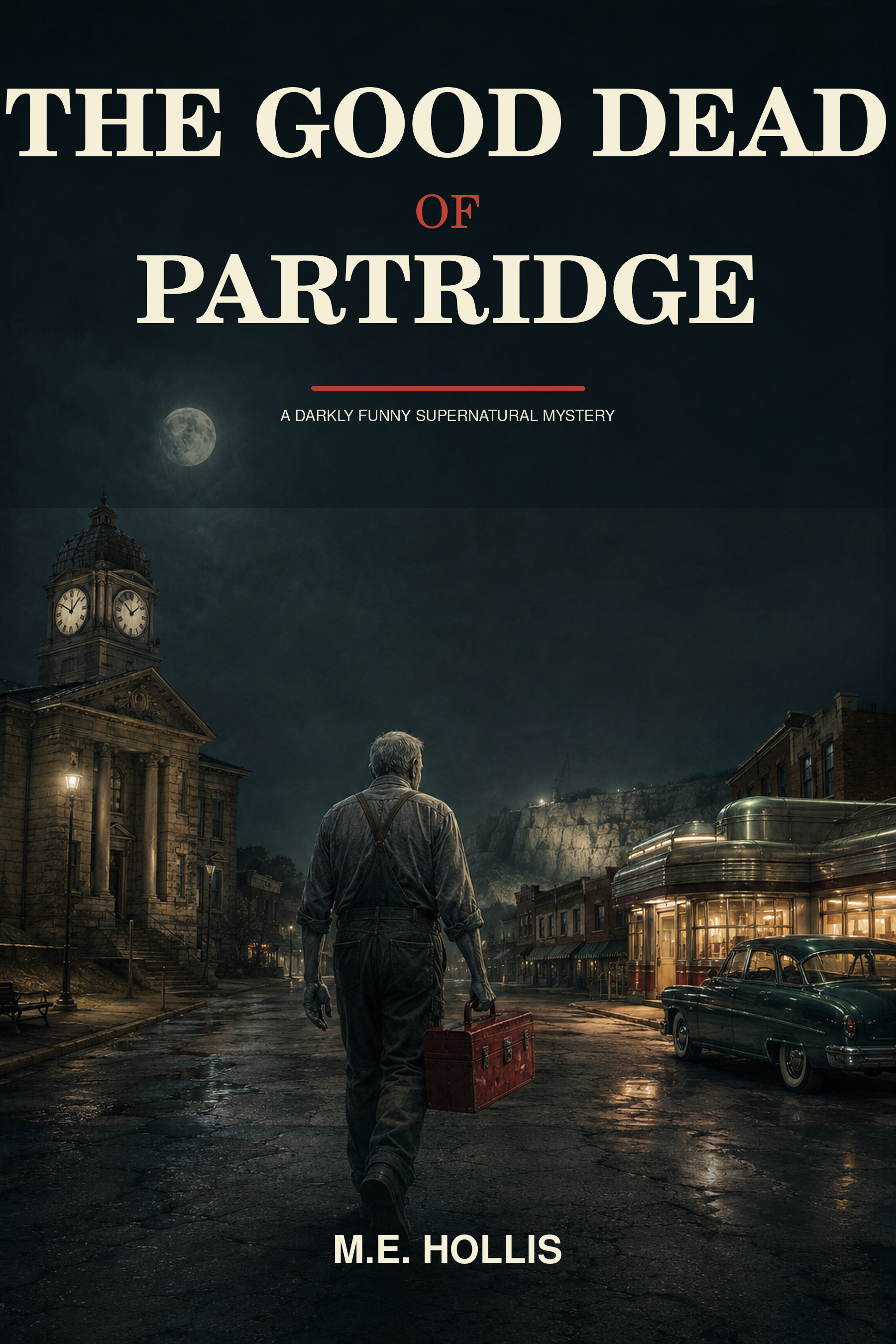
For readers who want more, book clubs planning a meeting, and press covering the book.
Ten questions worth arguing about. Three group activities. Host notes for in-person, virtual, and hybrid clubs. Everything you need for a real conversation. Free.
↓ Download the Full Kit (PDF)Book clubs of eight or more, ask about signed bookplates, virtual author visits, and custom discussion sessions.
"If the people who caused harm had to return and repair it, would the living forgive them?"
Choose six for a 60-minute meeting, or use all ten for a longer event.
Roxanne believes she sees people clearly enough to decide who deserves punishment. When does moral certainty become its own form of harm?
Jerry loves Roxanne, fears losing her, and keeps helping her. How much responsibility belongs to the person who follows?
Earl says dying did not change him. It made his shame impossible to ignore. Do you believe remorse was already part of him?
The returned grow stronger through service and weaker through selfishness. If redemption had visible consequences, would it still count as a moral choice?
Sheriff Bell knows who committed the murders, yet the victims cannot accuse their killers. What does justice require when the law and the harmed people point in different directions?
Mabel welcomes the dead before the rest of Partridge does. What makes her response brave, practical, or reckless?
Roxanne thinks punishment should hurt. Jerry begins to see memory and repair as punishment. Which view did the opening chapters make more persuasive?
Partridge starts benefiting from people who caused serious harm. Does useful work earn forgiveness, or does it only begin repayment?
The dead remember emotions more clearly than facts. Which emotional memory would reveal the most about Roxanne, Jerry, or you?
If your group created a mandatory redemption list for Partridge, what harm would you assign, what repair would you require, and who would decide when the work was complete?
Give each person a card. Write one harm a fictional Partridge resident caused on the front. On the back, assign the repair work. Read the cards aloud. Vote on which repair is fair, impossible, or overdue.
Two columns. First column, actions that deserve punishment. Second column, actions that might repair harm. Discuss where your group agrees, and where repair feels insufficient.
One person plays Mabel. Each member arrives as a character and explains why Mabel should serve them coffee, send them away hungry, or make conversation mandatory.
Who changed most in your eyes during the opening chapters, the dead, Jerry, Roxanne, or the town?
↓ Get the Full KitEverything you need to cover The Good Dead of Partridge. Downloadable, quotable, ready to go.
Ready-made starting points for features and interviews.
Publisher lines, not reader reviews.
"Nobody stays dead, and somehow that is the least complicated part."
"The dead do not want revenge. They want to help."
"Welcome to Partridge, where redemption is mandatory and coffee is still optional."
"Their murders are improving the community."
"A darkly funny mystery about guilt, repair, and the people who refuse to remain who they were."
"Some towns bury their secrets. Partridge puts them to work."
Read Chapter One. Meet the residents. Take the quiz. Get a postcard. Reserve your copy.